Single Family Residential: Rainwater Collection and/or Redirection
For more detailed information, please refer to the Stormwater Credit Manual.
Definition
Rainwater collection systems, such as rain barrels and above-ground cisterns, must be empty containers/structures and placed under downspouts to capture roof runoff. These systems slow runoff and promote soil absorption, improving water quality. Rainwater Redirection Systems connect downspouts to well-designed and maintained underground pipes. These pipes redirect rainwater from impermeable surfaces to stormwater management features that promote infiltration.
Guidelines
There are no County specifications for rainwater collection and/or redirection systems, however they must be properly installed and easily verifiable. Follow the manufacturer/vendor guidelines and instructions for installation.
Rainwater Collection Systems (Above Ground)

Keep the spigot open. For irrigation purposes, add extra storage (e.g., an extra rain barrel) beyond the minimum requirement.
Additional information is available here.
Existing or New: Both are eligible
Annual or Ongoing credit: Ongoing
Percent Credit: 5% (no duplication)
Please note: You will only receive a single 5% credit for this action if you have one or more rainwater collection and/or redirection system on your property.
Minimum: 100 gallons (may link together multiple rain barrels to achieve minimum required volume for credit)
Frequency of re-certification: Every 2 years
Required Documentation
- Photos of the installed system(s)
If pre-existing, provide the documentation denoted with an asterisk (*) below.
- Before photos if newly installed
- If other than rain barrels:
- Provide materials receipts or contractor invoices, including documentation of volume, clearly defined storage capacity, and release mechanisms *
- A site plan indicating the system location, connected roof area, and impervious area it serves
- Close-up photo of rainwater collection *
- Perspective photo with nearest structure in background *
Tips for Success
- Take both photo types
- Follow maintenance guidelines: Locate the rain barrel in a shady or protected location to avoid algae growth in the tank. Darker-colored tanks will help prevent algae growth as well. Check inflow regularly for debris. Inspect periodically during rain events to ensure water is entering and exiting the barrel properly. Rain barrels are capped with a fiberglass screen that allows water in but keeps mosquitoes out. If you’re still concerned, you can add a whole or half of a mosquito dunk to the water in your barrel to kill mosquito larvae. Mosquito dunks can be purchased at most garden supply stores.
- Provide proof of purchase (receipts/invoices), system specifications, and a proper site plan.
Typical Reasons for Denial of Recertification
Rain barrel is not connected to downspout. Proper documentation is not provided.
Rainwater Redirection Systems (Underground)
The primary goal is to manage stormwater more effectively by promoting soil absorption rather than direct discharge from gutters towards adjacent properties, other impervious surfaces, and/or the main storm sewer system. Underground rainwater redirection is designed for homeowners who use underground pipes to redirect rainwater from their roof gutters.

French Drain: Length of perforated pipe placed underground in gravel and line with permeable drainage fabric.
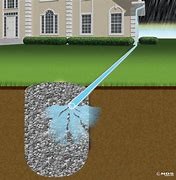
Dry well: An underground reservoir filled with stone and lined on the sides (not the bottom) with permeable drainage fabric.
Eligible Systems: French drains and Dry wells
Ineligible Systems: Popup drains (not part of a French drain or dry well system) which simply release downspout runoff without any storage component.
Existing or New: Both are eligible
Annual or Ongoing credit: Ongoing
Percent Credit: 5%
Please note: You will only receive a single 5% credit for this action if you have one or more rainwater collection or redirection system on your property.
Minimum: At least (1) one downspout must connect to an eligible rainwater redirection system
Frequency of Recertification: Every two years
Required Documents
- Photos of the installed system(s)
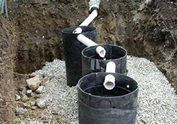
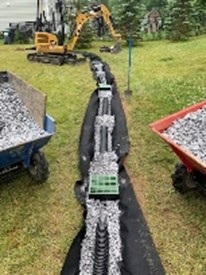

- Before photos if newly installed
- If pre-existing, provide the documentation denoted with *
- Materials receipts or contractor invoices

- Drawing indicating the system location(s), connected roof area and impervious area it serves *
- Written explanation where pipes direct the water (e.g., to swales or other stormwater features) *
Credit Recertification
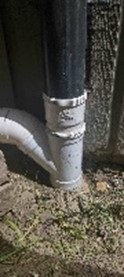
- Recent close-up photo of downspout connections
- Homeowner certifies systems are properly inspected and function properly.
Tips to Guide Your Work for Best Results
Tips for Success
- If new, take installation progress and completion photos. Take a photo of the pre-existing connection, connected to the downspout.
- To ensure your underground system functions properly:
- Regularly inspect and clean the entrances to your underground pipes.
- Check for any blockages or damage within the pipe system.
- Maintain areas where water is discharged (like swales) according to best practices.
- Provide proof of installation (receipts/invoices), system specifications, and a proper site plan detailing where the French drains are going from the gutters and location of dry wells.
- Due to these systems not being visible, we may require more detailed documentation/frequent inspections to verify they continue to function as intended.
Typical Reasons for Denial of Recertification
Proper documentation is not provided. Failure to certify the rainwater redirection facilities have been inspected and work as designed.