Arlington’s Magnolia Bog
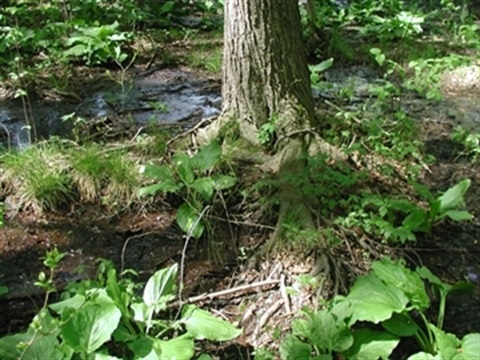
Within the Four Mile Run watershed at the southern end of Barcroft Park in Arlington County lies a globally rare ecosystem. Arlington’s Magnolia Bog wetland is one of less than two dozen known in the world.
This natural site boasts 23 plant species found nowhere else in Arlington, 32 locally rare plant species, and Virginia State Champion, County Champion, and Significant trees. Additionally, the bog is home to uncommon insects and a variety of locally rare animals.
Magnolia Bog Restoration Project
Arlington’s 25-acre Magnolia Bog is a fragile remnant of Arlington’s natural landscape. Nearby development, changes in the water table, invasive plants and other environmental stressors have all taken their toll. Driven by a goal to steward Arlington’s natural and historic resources, the Department of Parks and Recreation developed a five-year restoration plan to save the bog. Beginning in 2011, County staff partnered with volunteer groups, including Arlington Regional Master Naturalist, Earth Sangha, Virginia Native Plant Society and others to restore the site.
Volunteers and County staff inventoried the bog’s plants, uprooted invasive plants, built a vernal pool and planted native plants. Today, the bog and its surrounding buffer area are nearly 90 percent free of invasive plants. Long-lost animals and plants are returning. Spring peeper tree frogs, wood frogs, gray foxes, yellow-crowned night-herons, little wood satyr butterflies and rare plants are thriving.
In 2017, the Magnolia Bog restoration project earned the Best New Environmental Sustainability Award in 2016 from the Virginia Recreation and Park Society.
Native Plant of the Month
Katniss - Arrowhead - Duck Potato
(Sagittaria latifolia)
Broad-leaved Arrowhead (Sagittaria latifolia) is currently in bloom in our wetlands and goes by a variety of names: Duck Potato, Wapato, and Indian Potato for instance. It is also called Katniss, a name now made more famous for its use for the main character in the Hunger Games, Katniss Everdeen. She was indeed named for this once very important food plant. Read more.